
Why Reducing Pressure Drop Is a Strategic Advantage in Meat and Pet Food Processing
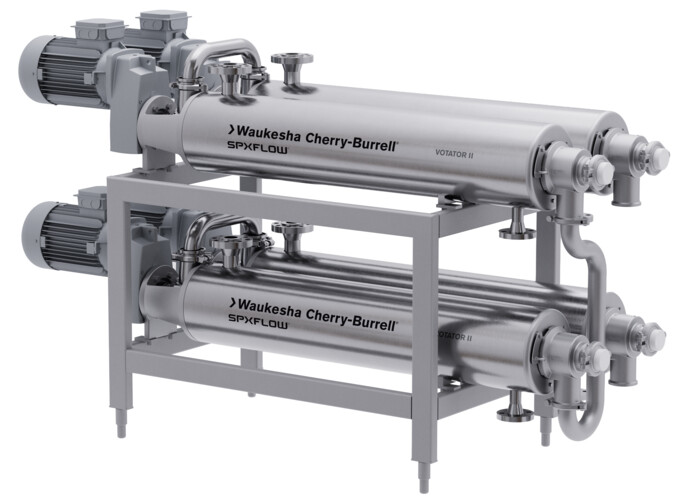
In today’s meat and pet food processing environment, efficiency is no longer measured by throughput alone. Processors must balance growing production demand with system stability, product integrity, equipment longevity and regulatory compliance. One factor quietly influencing all of these outcomes is pressure drop — and its impact is far greater than many operations realize.
As production volumes rise and formulations become more demanding, many processors are adding multiple scraped surface heat exchangers in series to achieve higher capacity, tighter thermal control or greater processing flexibility. While this approach can help meet demand, it also increases system resistance. Over time, that added pressure can limit flow, strain pumps, increase wear and restrict future expansion.
Reducing pressure drop across thermal processing systems has become a strategic lever for improving performance, reliability and long-term flexibility.
The Hidden Cost of Pressure Drop
Pressure drop is often treated as an unavoidable byproduct of processing high-viscosity, particulate-rich products such as meat slurries, emulsions and pet food. But as more scraped surface heat exchanger cylinders are added to a line, overall system pressure can quickly rise.
The consequences are familiar across meat and pet food plants:
- Increased mechanical strain on positive displacement pumps
- Greater limitations on equipment selection due to pressure ratings
- Reduced energy efficiency
- Elevated product shear that can compromise texture and yield
- Less operational headroom for future expansion
- Increased maintenance costs and downtime risk
For many facilities, these challenges are addressed through workarounds, maintenance or incremental upgrades. But the root cause often remains embedded in the system design itself.
Why Pressure Stability Matters More Than Ever
In U.S. meat processing, daily clean-out-of-place procedures and USDA inspection requirements demand robust, serviceable equipment that performs reliably within defined operating limits. Positive displacement pumps, which are commonly used to move high-viscosity products through these systems, must operate within pressure constraints.
When system pressure approaches those limits, processors face difficult trade-offs. They may need to reduce throughput, accept higher equipment wear, invest in a larger pump or add a booster pump. Booster pump configurations can add complexity, as both pumps must be synchronized to avoid over-pressurization, inlet starvation or cavitation. Any combination of these trade-offs can significantly increase the complexity of the entire process system.
Reducing pressure drop changes this equation.
By lowering resistance throughout the system, processors gain more stable operating conditions, improved pump efficiency, reduced mechanical stress and greater flexibility to expand capacity without rebuilding the entire line. In practical terms, pressure drop reduction helps move the plant from operating near its limits to operating within a more efficient, reliable range.
Waukesha Cherry-Burrell’s Pressure Drop Solution for Multi-Cylinder Systems
Waukesha Cherry-Burrell addresses pressure drops with its Votator® II Pressure Loss Reduction configuration designed for high-viscosity, pressure-constrained systems.
As meat and pet food processors add multiple Votator® scraped surface heat exchangers in series to increase capacity, system pressure can rise quickly. This configuration helps address that challenge by combining a smaller 3-inch shaft with larger 4-inch product ports to reduce pressure drop through both the heat exchanger and connecting piping.
The smaller shaft increases annular flow area inside the cylinder, giving product more room to move through the heat transfer zone. The larger 4-inch ports support larger piping, which helps reduce system resistance and relieves the pressure burden on the positive displacement pump pushing product through a multi-cylinder setup.
This solution is also retrofit-compatible with existing Votator II units. Processors using Votator II equipment today can swap in larger ports and smaller shafts without replacing the scraped surface heat exchanger unit. This allows facilities to improve flow, reduce pressure drop and support greater throughput while continuing to use their existing equipment.
Pressure Drop Reduction as a Long-Term Strategy
Reducing pressure drop should not be viewed as a one-time fix. It is a long-term operational strategy that supports sustainable capacity growth, lower total cost of ownership and greater adaptability as product portfolios evolve.
By engineering pressure reduction into both the heat exchanger and the surrounding system, processors can improve asset efficiency, reduce mechanical stress and create more flexibility for future production needs.
As meat and pet food processors face increasing pressure from rising demand, tighter margins and evolving product requirements, system efficiency becomes a competitive advantage.
Designing for Tomorrow’s Demands
Tomorrow’s processing facilities must do more with less: less energy, less downtime and less mechanical stress while delivering more throughput, consistency and flexibility.
Reducing pressure drop is one way to effectively meet those demands at their source.
With the Waukesha Cherry-Burrell Votator II Pressure Loss Reduction configuration, processors can address pressure loss at both the equipment and system level. By combining a smaller shaft, larger ports and retrofit-ready compatibility, WCB helps processors reduce system strain, unlock capacity and protect product quality without a full system redesign.
In an industry where margins are tight and expectations are rising, reducing pressure drop is more than an engineering advantage. It is a strategic one.
Let's Connect
Related Content
 Food & Beverage
Meet modern food processing demands with precise, efficient production solutions.
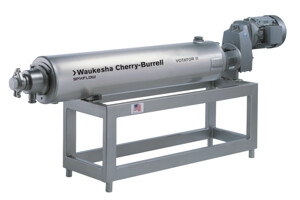 Votator Ii Horizontal Scraped Surface Heat Exchangers
Reliable processing technology for improved production performance.
 Votator Ii Vertical Scraped Surface Heat Exchangers
Reliable processing technology for improved production performance.
 Is an SSHE Your Process Missing Ingredient?
 Why ASME-Certified SSHE Tubes Matter